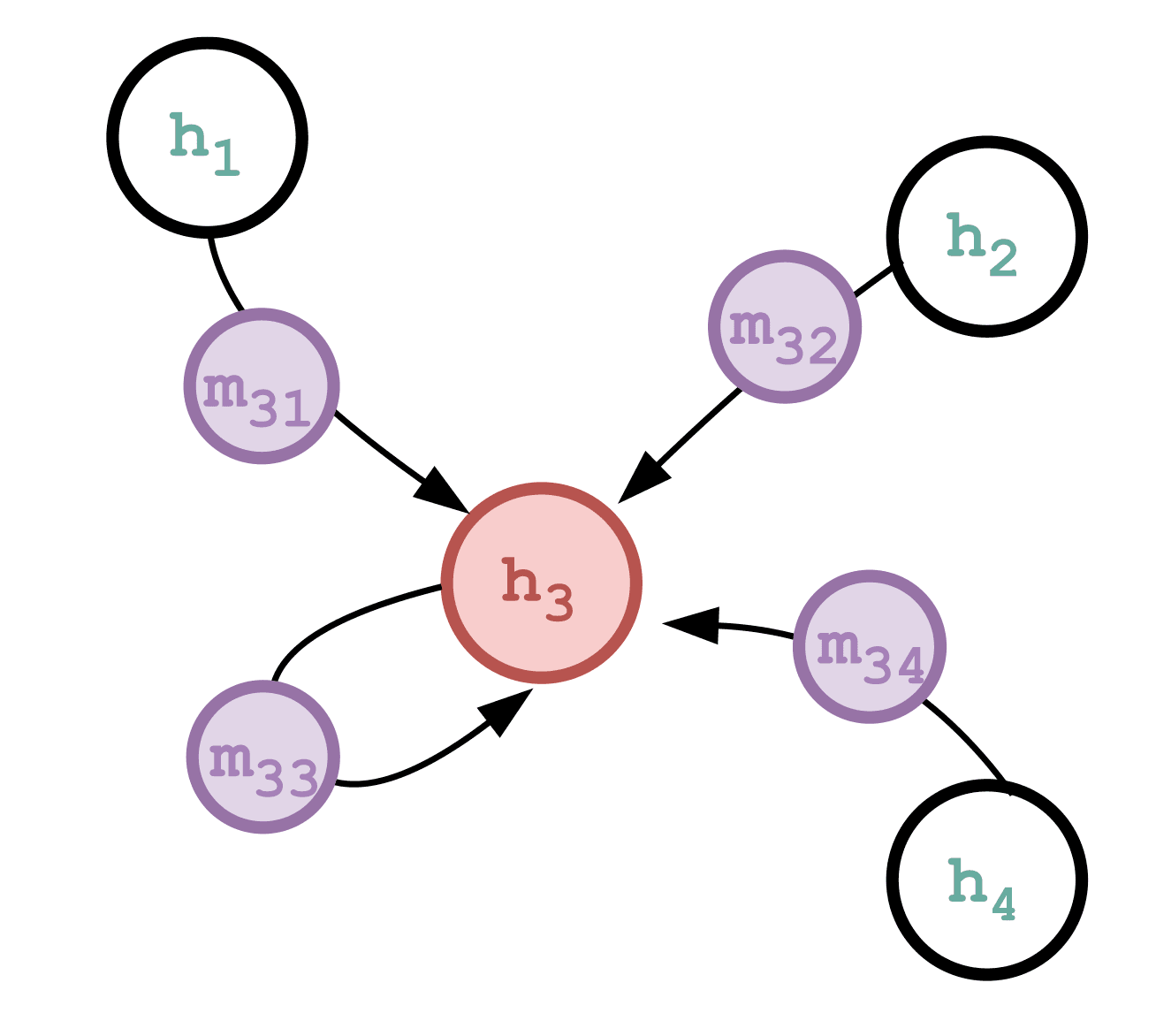
Most of deep learning applications in robotics rely on structured data representations, such as time series, images, or text.However, when it comes to the analysis and exploitation of data without such structure, like point clouds, keypoints-based modelling of rigid or soft robots, or functional relationship between elements, standard deep learning approaches may struggle.Luckily, graphs can be easily used to model unstructured data, and learning on graph representations enables a vast amount of novel skills for intelligent machines.Francesca Pistilli and myself took care about that, and wrote a survey on the use of graph learning for robotic applications, which you can find
here.We provide a comprehensive analysis on the use of graph learning for robotic systems, with the aim of providing a general understanding of of the foundations of graph learning, a revision of how they have been used in robotics applications, and a thorough discussion of how further research could be shaped to represent a game-changer on many downstream tasks.We cover a large spectrum of applications, such as bodies and contacts modelling, robotic manipulation, human action recognition, fleet motion planning, and many more.