The team has been busy, and several new works are now out, touching all three of our main research directions.
Human-Inspired robot learning
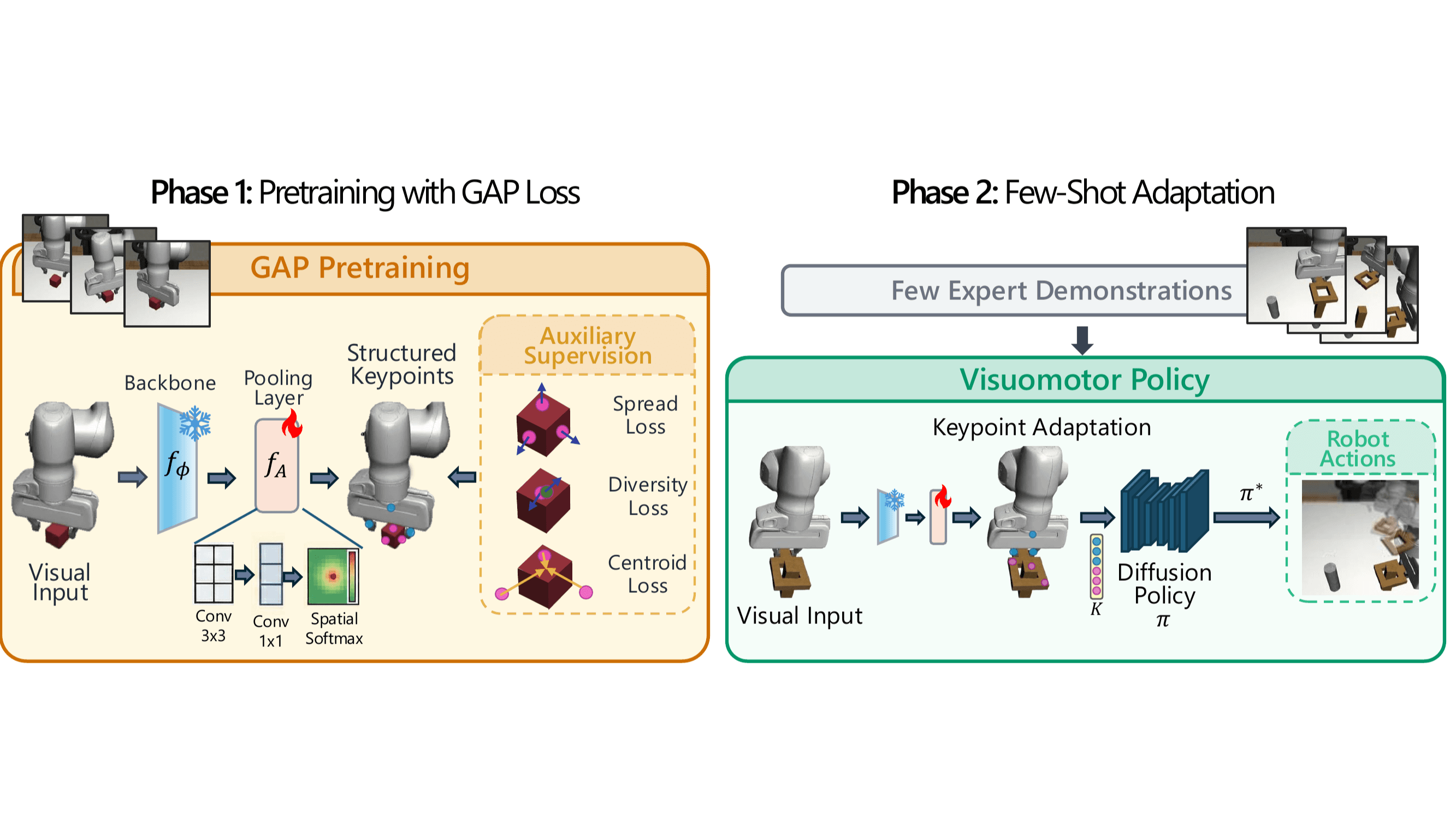
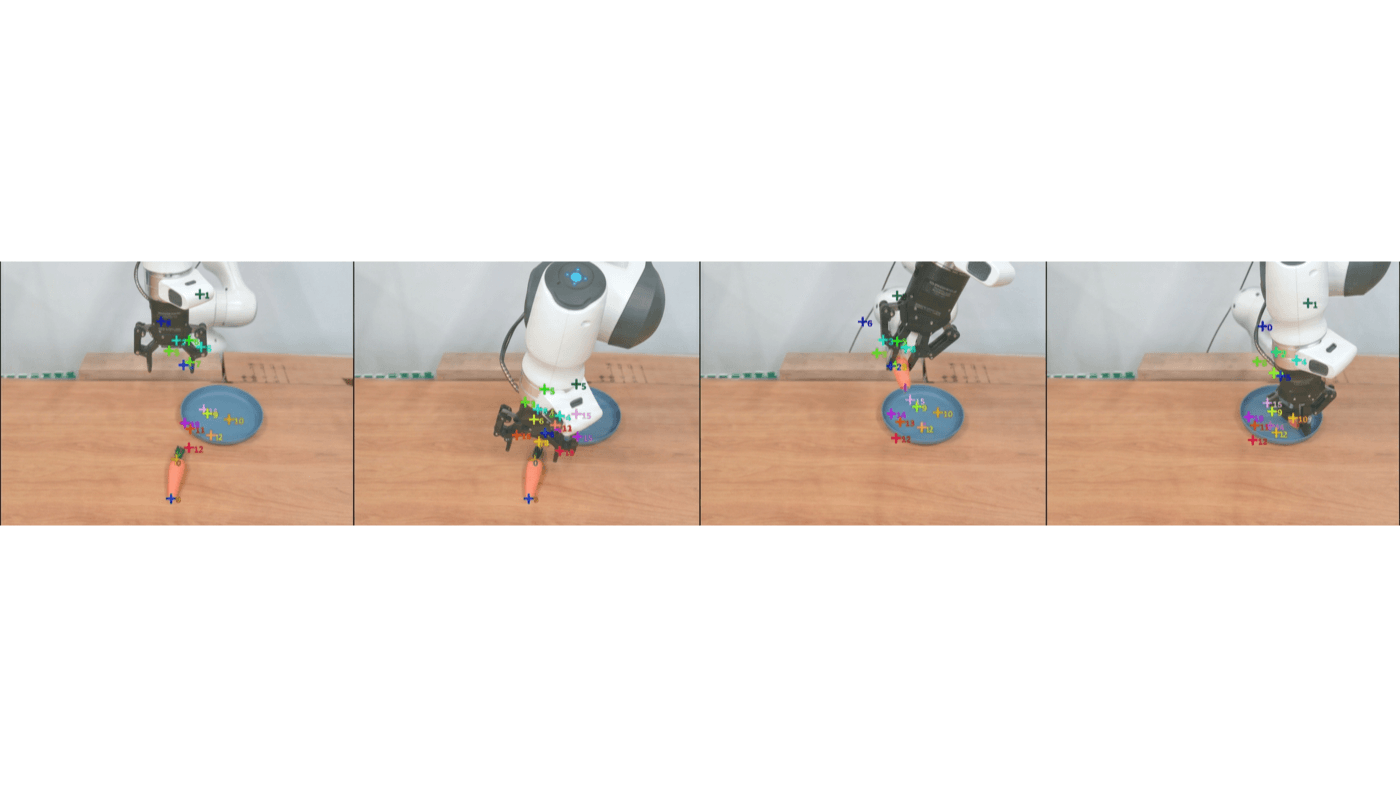
Our work on GAP: Geometric Anchor Pre-training for data-efficient visuomotor learning has been accepted at IROS 2026. GAP is a simple, action-free warm-up stage that regularizes the spatial adapter before imitation learning, producing stable geometric anchors for few-shot policy learning while keeping the vision foundation model frozen. Select2Plan, our training-free framework for high-level robot planning through structured VQA and in-context learning, has also appeared in IEEE RA-L.
Egocentric Vision for human behavior understanding
HiERO has been accepted at ICCV 2025. It is a weakly-supervised method that enriches video features with hierarchical activity threads, achieving state-of-the-art results on egocentric benchmarks and outperforming fully-supervised methods on procedure learning in zero shot. Building on it, HiERO-StepG ranked second on the Ego4D Step Grounding Challenge, completely zero-shot and without procedure-specific annotations.
Scene understanding for robot manipulation and beyond
SANSA: Unleashing the Hidden Semantics in SAM2 for Few-Shot Segmentation has been accepted at NeurIPS 2025. SANSA repurposes SAM2 for few-shot segmentation by making its latent semantic structure explicit, with state-of-the-art results, flexible prompting and a compact, fast design. We also released RGB-only Active 3D Scene Graph Generation for indoor mobile robots, a fully visual framework that builds 3D scene graphs from RGB input only.